



Calcium Channel
Ca2+ channels; Ca channels
Calcium channel is an ion channel which displays selective permeability to calcium ions. It is sometimes synonymous as voltage-dependent calcium channel, although there are also ligand-gated calcium channels. Voltage-gated calcium (CaV) channels catalyse rapid, highly selective influx of Ca2+ into cells despite a 70-fold higher extracellular concentration of Na+. Some calcium channel blockers have the added benefit of slowing your heart rate, which can further reduce blood pressure, relieve chest pain (angina) and control an irregular heartbeat.
Calcium Channel Isoform Specific Products
All Product Categories
-
Calcium Channel Inhibitors
(581)
View all products
-
Calcium Channel Agonists
(35)
View all products
-
Calcium Channel Antagonists
(213)
View all products
-
Calcium Channel Activators
(85)
View all products
-
Calcium Channel Modulators
(46)
View all products
-
Calcium Channel Chemical
(1)
View all products
-
Calcium Channel Inducers
(11)
View all products
-
Calcium Channel Controls
(10)
View all products
-
Calcium Channel Ligands
(7)
View all products
-
Calcium Channel Related Products (1225)
Related Products (1225)

-
Antibodies (29)
-
Related Compound Screening Libraries (1)
-
Calcium Channel Isoform Comparison
-
Ginsenoside Rd (Standard)
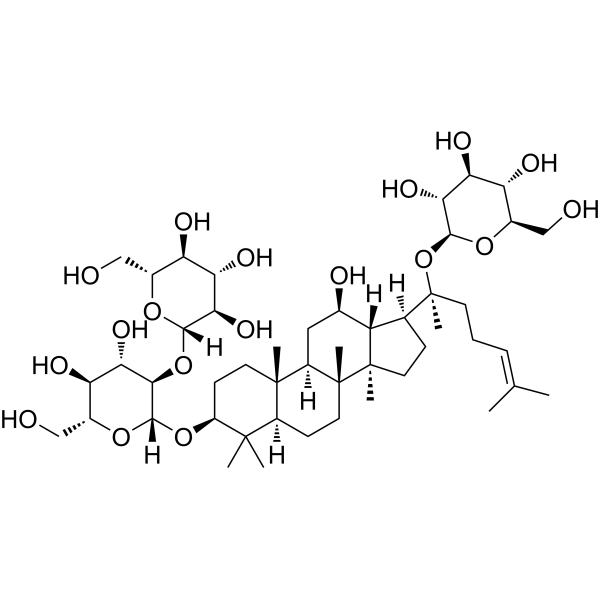 0 ImagesSynonyms: Gypenoside VIII (Standard)Ginsenoside Rd (Standard) is the analytical standard of Ginsenoside Rd. This product is intended for research and analytical applications. Ginsenoside Rd inhibits TNFα-induced NF-κB transcriptional activity with an IC50 of 12.05±0.82 μM in HepG2 cells. Ginsenoside Rd inhibits expression of COX-2 and iNOS mRNA. Ginsenoside Rd also inhibits Ca2+ influx. Ginsenoside Rd inhibits CYP2D6, CYP1A2, CYP3A4, and CYP2C9, with IC50s of 58.0±4.5 μM, 78.4±5.3 μM, 81.7±2.6 μM, and 85.1±9.1 μM, respectively.
-
CP-288886
 0 ImagesCat. No.: HY-105358CAS No.: 221332-74-7CP-288886 is a cysLT1 receptor antagonist with a Ki value of 0.004 μM. CP-288886 exhibits comparable activity to Zafirlukast (HY-17492) and Pranlukast (HY-B0290). CP-288886 inhibits calcium mobilization with an IC50 of 0.0005 μM in human U937 cells. CP-288886 has high oral bioavailability. CP-288886 possesses anti-asthmatic activity in a guinea pig asthma model and can be used for the research of diseases such as asthma.
-
ANO61
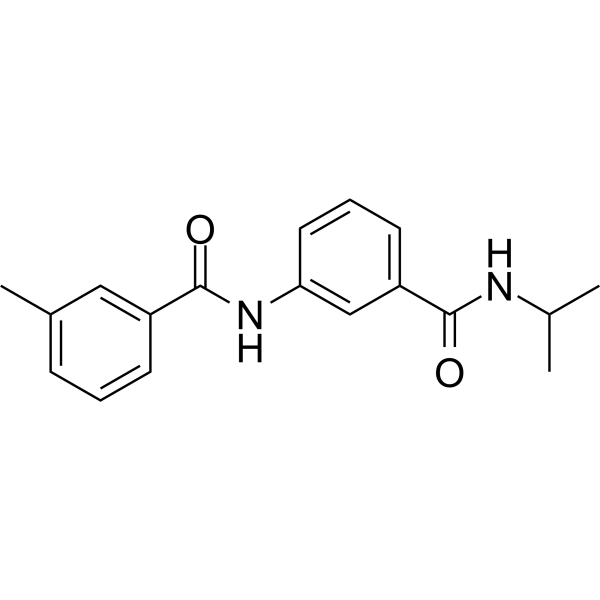 0 ImagesCat. No.: HY-162374CAS No.: 940476-20-0ANO61 is a dibenzyl formamide derivative, which exhibits an antiplatelet efficacy through modulation of thrombin-induced Ca2+ response with an IC50 of 47.7 μM.
-
Gabapentin-d4 hydrochloride
 0 ImagesCat. No.: HY-A0057AS2Gabapentin-d4 hydrochloride is the deuterium labeled Gabapentin hydrochloride (HY-A0057A). Gabapentin hydrochloride is a potent, orally active P/Q type Ca2+ channel blocker. Gabapentin hydrochloride inhibits neuronal Ca2+ influx and reduction of neurotransmitter release. Gabapentin hydrochloride is a GABA analog that can be used to relieve neuropathic pain.
-
(S)-Lercanidipine-d3 hydrochloride
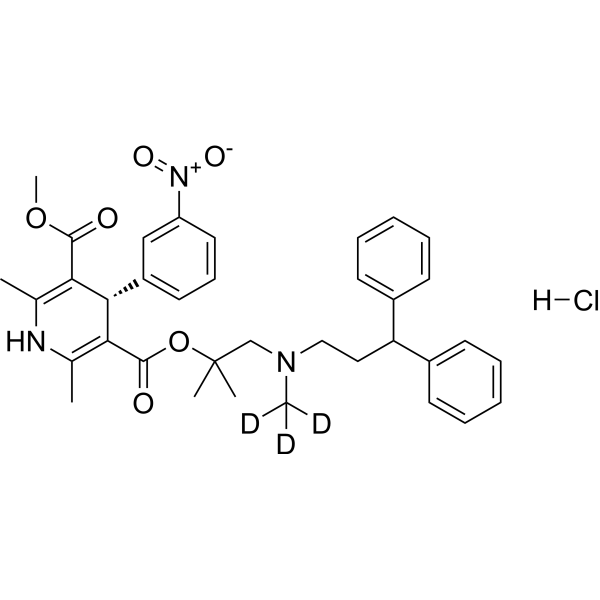 0 ImagesCat. No.: HY-B0612ESCAS No.: 1217740-02-7(S)-Lercanidipine-d3 hydrochloride is a deuterium labeled Lercanidipine D3 hydrochloride. (S)-Lercanidipine hydrochloride is an antihypertensive agent.
-
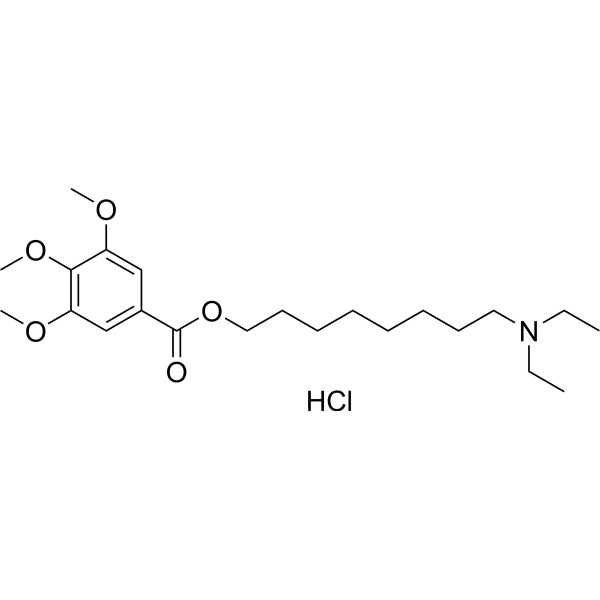
Agaric acid (Standard)
 0 ImagesAgaric acid (Standard) (Agaricinic Acid (Standard)) is the analytical standard of Agaric acid (HY-N4104). This product is intended for research and analytical applications. Agaric acid (Agaricinic Acid) is an orally active inhibitor of adenine nucleotide translocase found in specific fungi. Agaric acid can inhibit the biofilm formation of various bacteria such as Salmonella. Agaric acid can also induce mitochondrial permeability transition, prompting mitochondria to release Ca2+, disrupting the transmembrane potential, and causing mitochondrial swelling. In addition, Agaric acid can also inhibit citrate transport in liver mitochondria and participate in the inhibition of fatty acid synthesis, affecting multiple metabolic processes.
-
Wy 27569
 0 ImagesCat. No.: HY-105866CAS No.: 103417-69-2Wy 27569 is an orally active vascular selective calcium channel blocker that can effectively lower blood pressure. Wy 27569 is a thromboxane synthase inhibitor that can reshape prostaglandin balance, reduce pro thrombotic TXA2, and increase anti thrombotic PGI2. Wy 27569 can be used for research on cardiovascular diseases such as hypertension and angina.
-
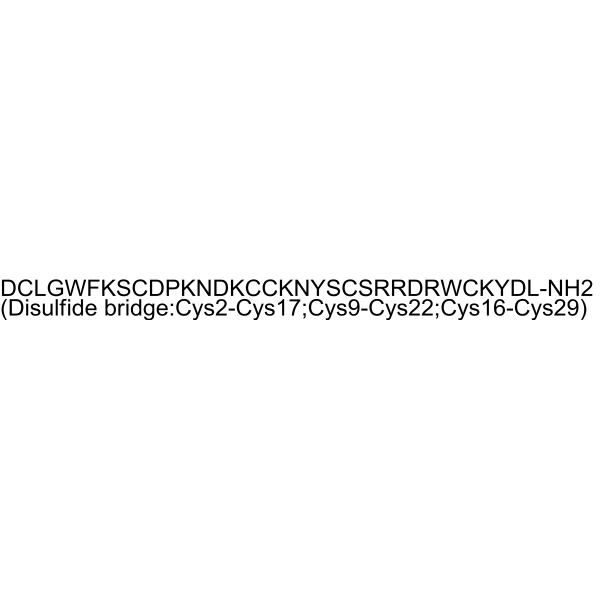
PACAP (1-38), human, ovine, rat TFA
 0 ImagesCat. No.: HY-P0221ASynonyms: Pituitary Adenylate Cyclase Activating Polypeptide 38 TFAPACAP (1-38), human, ovine, rat TFA is a PAC1 receptor agonist. PACAP (1-38), human, ovine, rat TFA binds to PACAP type I receptor, PACAP type II receptor VIP1, and PACAP type II receptor VIP2 with IC50s of 4 nM, 2 nM, and 1 nM, respectively. PACAP (1-38), human, ovine, rat TFA increases the α-secretase activity. PACAP (1-38), human, ovine, rat TFA elevates cytosolic Ca2+, increases proliferation and increases phosphorylation of extracellular regulates kinase (ERK) and the epidermal growth factor receptor (EGFR). PACAP (1-38), human, ovine, rat TFA demonstrates potent, efficacious, and sustained stimulatory effects on sympathetic neuronal NPY and catecholamine production. PACAP (1-38), human, ovine, rat TFA can be used for neurotrophic and neuroprotective research.
-
(R)-Niguldipine
 0 ImagesCat. No.: HY-101390DCAS No.: 120054-86-6(R)-Niguldipine, a R-epimer of Niguldipine (HY-101390B), is a calcium channel antagonist. (R)-Niguldipine exerts a vasodilatory effect by blocking calcium channels and reducing the transmembrane influx of calcium ions. (R)-Niguldipine can inhibit U-46619 (HY-108566)-induced coronary artery contraction in guinea pig Langendorff hearts (pID50 of 9.93), has high affinity for calcium channel binding sites on guinea pig skeletal muscle membranes (Ki of 8.10), and lowers blood pressure in spontaneously hypertensive rats (pED30 of 5.55). (R)-Niguldipine can improve cardiovascular diseases such as hypertension, angina pectoris, and arrhythmias.
-
Cavα2δ1&NET-IN-2
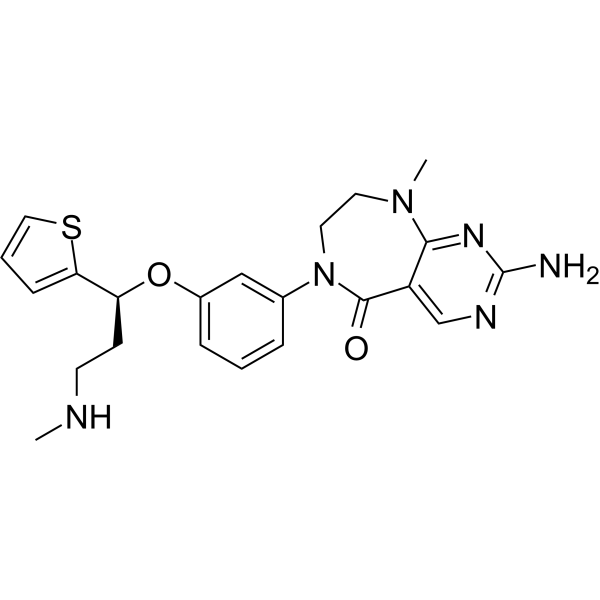 0 ImagesCat. No.: HY-148863CAS No.: 2143586-17-6Cavα2δ1&NET-IN-2 (Compound 45CS) is a dual inhibitor of the α2δ‑1 subunit of voltage-gated calcium channels (Cavα2δ-1) and the norepinephrine transporter (NET). Cavα2δ1&NET-IN-2 inhibits Cavα2δ-1 with a Ki of 454 nM. Cavα2δ1&NET-IN-2 inhibits NET with a Ki of 59 nM and IC50 of 7 nM. Cavα2δ1&NET-IN-2 can be used for research of pain.
-
AK-2-38
 0 ImagesCat. No.: HY-118674CAS No.: 122508-12-7AK-2-38, a Nifedipine (HY-B0284) analogue, is a calcium channel antagonist. AK-2-38 also has partial agonist effects on isolated guinea pig left atrium.
-
Clonixin-13C,d3
 0 ImagesCat. No.: HY-121235S1Synonyms: SCH-10304-13C,d3Clonixin-13C,d3 (SCH-10304-13C,d3) is the deuterium and 13C-labeled Clonixin (HY-121235). Clonixin is an orally active non-steroidal anti-inflammatory agent (NSAID) that inhibits COX synthesis. Clonixin acts as a voltage-gated L-type calcium channel blocker, exerts vasodilatory effects by antagonizing Ca2+ in vascular smooth muscle. Clonixin inhibits TGF-β, reduces lung coefficient, immune cell infiltration level, oxidative stress response, airway resistance, hydroxyproline content and collagen deposition. Clonixin can be used in research related to inflammation such as idiopathic pulmonary fibrosis and moderate to severe pain.
-
GIP (22-51) human
 0 ImagesCat. No.: HY-P10972CAS No.: 957470-49-4Synonyms: Glucose-dependent Insulinotropic Peptide (22-51) (human)GIP (22-51) human (Glucose-dependent Insulinotropic Peptide (22-51) human) is a potent proatherosclerotic peptide hormone consisting of 30 amino acids. GIP (22-51) human can activate the NF-κB signaling pathway, promote the expression of MMP-8, and induce the expression of proinflammatory and proatherosclerotic proteins. GIP (22-51) human can also increase the level of intracellular free Ca2+ in THP-1-induced macrophages. GIP (22-51) human can be used in the research of atherosclerosis.
-
PAMP-12 (unmodified) TFA
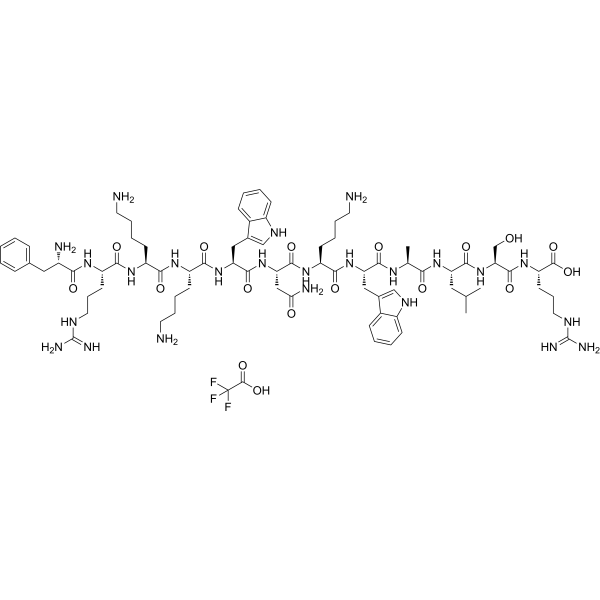 0 ImagesCat. No.: HY-P3419APAMP-12 (unmodified) TFA is an endogenous peptide and is a MrgX2 agonist. PAMP-12 (unmodified) TFA can reduce cAMP accumulation, increase Ca2+ levels, enhance beta-arrestin recruitment, decrease IP-1, and increases phosphoERK. PAMP-12 (unmodified) TFA can elicit hypotension through inhibiting catecholamine secretion from sympathetic nerve endings and adrenal chromaffin cells. PAMP-12 (unmodified) TFA can be used for the research of hypotension and ulcerative colitis.
-
KT-362
 0 ImagesCat. No.: HY-101607CAS No.: 105394-80-7KT-362 is an intracellular calcium antagonist. KT-362 can inhibit NE-induced contractions and IP accumulation in vivo experiments.
-
Calcitonin (chicken)
 0 ImagesCat. No.: HY-P10237CAS No.: 100016-62-4Calcitonin chicken is a hormone, that regulates calcium metabolism. Calcitonin chicken suppresses the cell motility and bone resorption in neonatal rat osteoclasts.
-
HA-1004 hydrochloride
 0 ImagesCat. No.: HY-112348CAS No.: 92564-34-6HA-1004 hydrochloride is a selective inhibitor of PKA, which can inhibit lipolysis and induce vascular relaxation. HA-1004 hydrochloride is also a dual inhibitor of cyclic GMP-dependent protein kinase and cyclic AMP-dependent protein (Cyclic GMP-AMP Synthase), and is involved in smooth muscle, second messenger, cyclic AMP and cyclic GMP regulation mechanisms. HA-1004 hydrochloride an antagonist for calcium, that can be used as a vasodilator to inhibit the contraction of rabbit aortic strips, or to antagonize ERK and tyrosine hydroxylase (TH) phosphorylation in morphine abstinence rat models.
-
Acetylcholine-d13 bromide
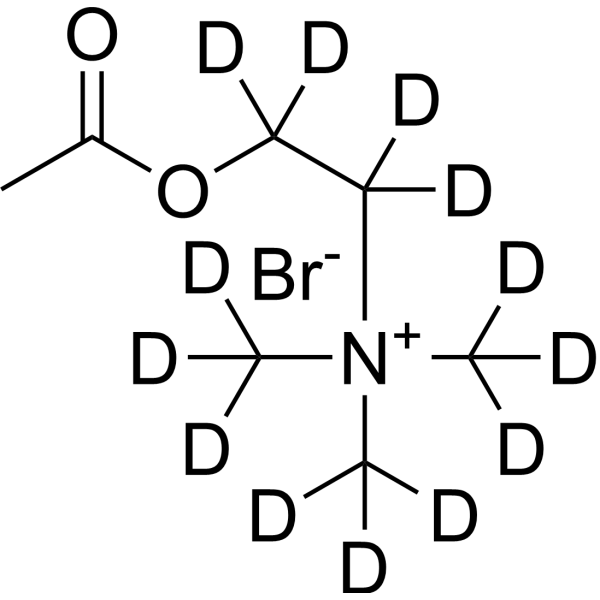 0 ImagesCat. No.: HY-B0282AS2Purity: 98.55%Synonyms: ACh-d13 bromideAcetylcholine-d13 (bromide) is the deuterium labeled Acetylcholine bromide.




